
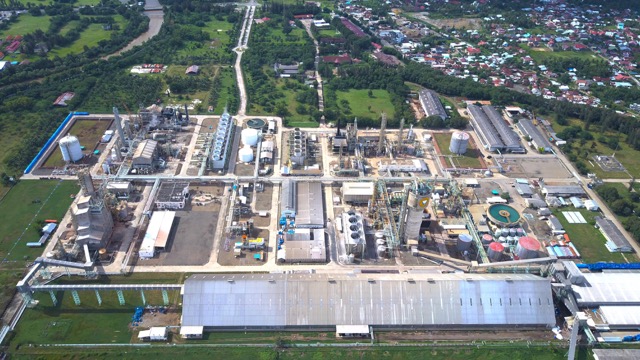
Transisi energi di Asia Tenggara menghadapi berbagai tantangan yang perlu diselesaikan secara kolektif. Ketua Badan Kerja Sama Antar-Parlemen (BKSAP) DPR RI Mardani Ali Sera menekankan pentingnya kolaborasi antarnegara untuk mewujudkan kawasan yang berbasis energi bersih dan terbarukan.
“Kita mesti berkolaborasi dan bersatu mewujudkan Asia Tenggara yang berbasis energi bersih dan terbarukan,” ujar Mardani dalam webinar Transisi Energi yang diselenggarakan oleh Stratsea dan Asatu Research & Insights. Webinar ini menghadirkan sejumlah pakar dari berbagai negara di Asia Tenggara yang membahas kendala utama dalam transisi energi.
Dr. Zul Ilham, Associate Professor di Universiti Malaya, mengungkapkan bahwa kebutuhan investasi besar menjadi hambatan utama bagi pengembangan energi bersih di kawasan.
“Investment costs continue to be a barrier for technologies such as geothermal and offshore wind, which require significant upfront capital,” he explained.
Similarly, Christina Ng, Co-founder of the Energy Shift Institute, highlighted the factors contributing to investor hesitation in funding energy transition projects in Southeast Asia.
“What investors truly need is policy stability. Unfortunately, in many developing markets, including Southeast Asia, policies often fluctuate. This creates uncertainty and undermines investor confidence,” said Christina.
According to World Economic Forum data, ASEAN is the world’s fourth-largest energy consumer, with a population approaching 700 million. Over the past two decades, energy consumption in the region has increased by an average of 3 percent annually—a trend that is expected to continue through the end of this decade.
As a result, carbon emissions in Southeast Asia are also on the rise, surpassing the global average by 1 percent in 2022, with an annual growth rate of around 3 percent. These figures underscore the urgency for deeper regional collaboration and more integrated energy policies.
The webinar also highlighted the critical role of the private sector in supporting the energy transition. M. Amin Zaim from Asatu Research & Insights stressed that private sector involvement can accelerate both investment and innovation in clean energy.
Meanwhile, Dr. Ardhi Arsala Rahmani, Senior Research Officer at Youth for Energy – Southeast Asia, emphasised the role of youth as agents of change who can drive the adoption of green energy.
“Young people must become more actively involved in energy policy and energy transition advocacy. Their participation can foster innovation and accelerate the shift towards renewable energy,” he concluded.